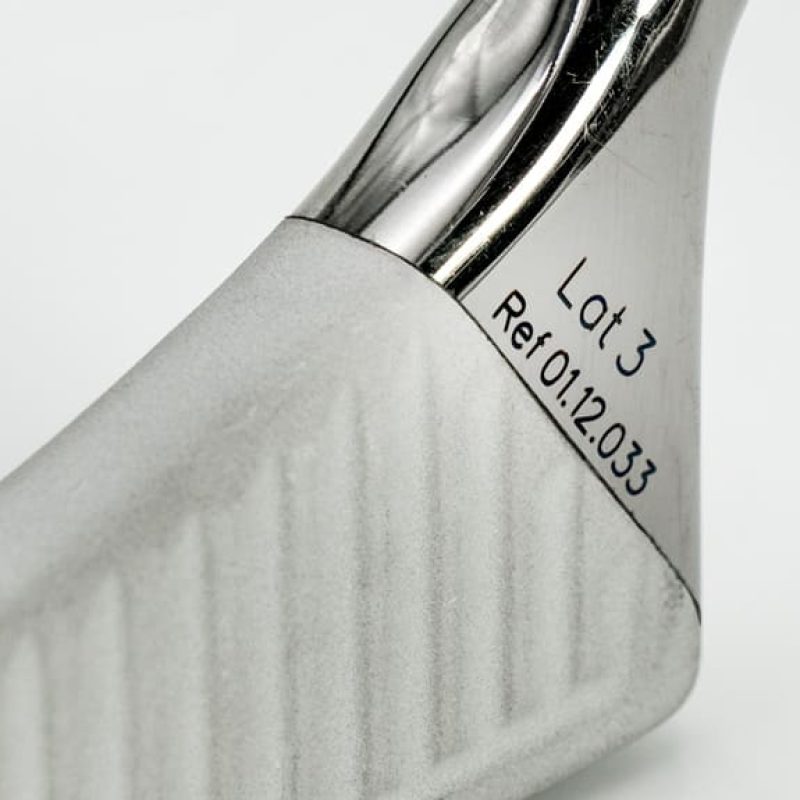
Metal is certainly the material on which the laser has its best effect and on which it is easiest to achieve diverse results. Laser marking on metals guarantees a clean and precise result. On an industrial level, laser is the most efficient technology: with laser marking, the metal component is not damaged and the result is resistant to acids and other corrosive chemicals.
Metals
Why laser marking?
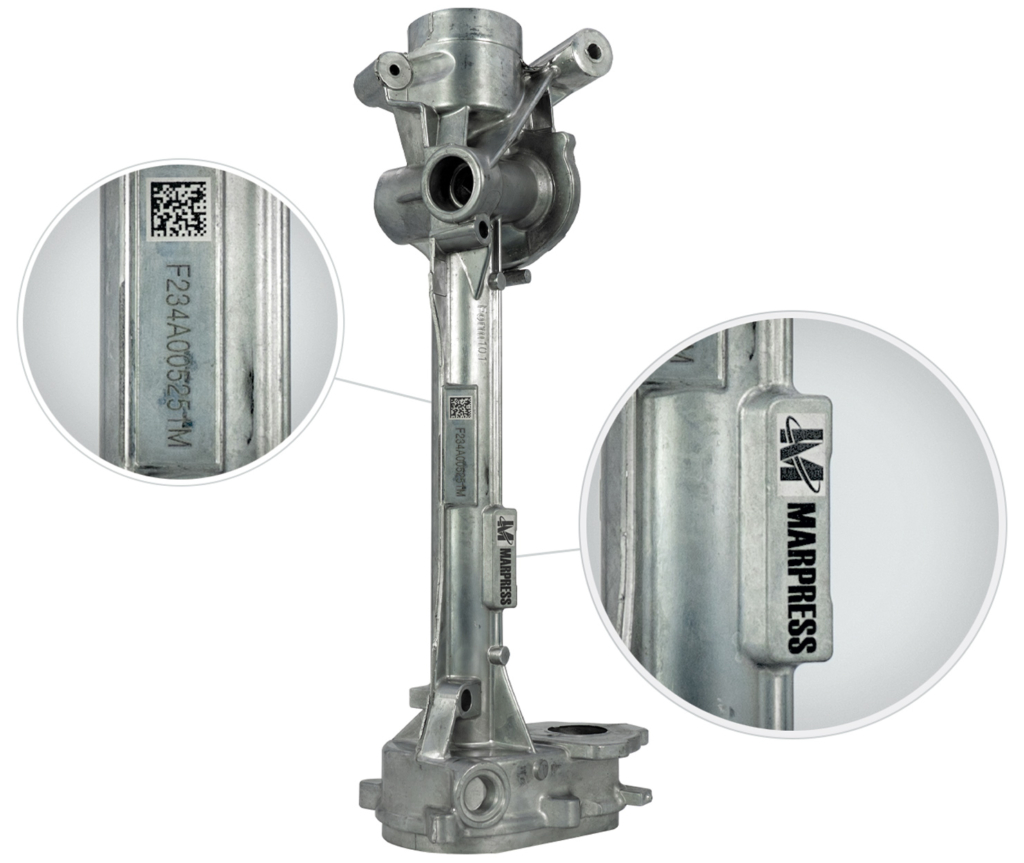
Metal is the material that is most often laser-marked. The entire automotive supply chain consists mainly of metal products. Many hydraulic and medical components are also metallic. The demand that laser marking most often satisfies is that of traceability. This requires the marking of identification codes, most often QRcodes and DataMatrix. Luminar laser markers with the proprietary FlyCAD software are able to create codes with extreme versatility. The software is easy to use and allows automatic data management, connecting directly to the customer’s MES-ERP system. Luminar laser markers can also integrate a vision system for verification and grading of marked codes.
Within one station of the production chain, the traceability of its products is ensured by a high level of automation and expertise. Marking lasers perform high-contrast, high-speed processing on all types of metal, even if they have undergone post-production processing or undergone invasive work. The type of marking we are talking about is also called DPM (direct part marking) because it is done directly on the component without labels or plates.
Metal Marking
Lasers for Metal Marking
The most suitable laser technology for laser marking of metals is the fiber laser. It is ideal for laser marking, micromachining and cutting of all metals and alloys. It is also suitable for painted metals and metals with surface treatments such as anodised aluminium. The fiber laser can be used in its standard version as well as in its MOPA and Picosecond versions, which allow certain more specific results to be obtained on different types of metal. Moreover, compared to other stamping and writing technologies, laser marking is the most prevalent in the industrial world.
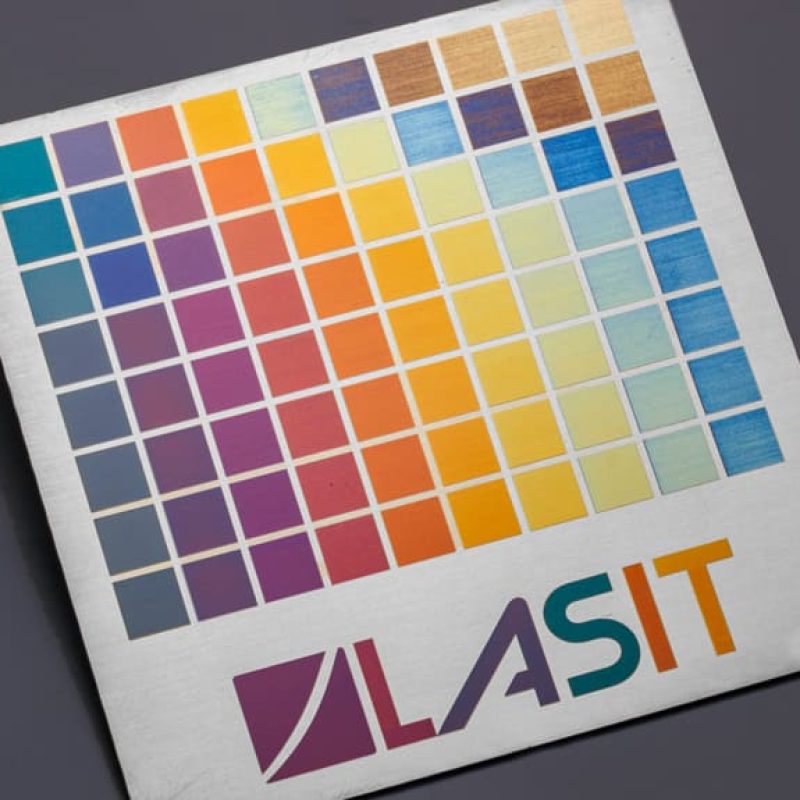
The MOPA laser can make coloured marks on steel and black marks on anodised aluminium. The ability to control its parameters with greater agility makes it a more versatile laser and ideal for those seeking aesthetic markings of a certain type. Laser marking is subject to less corrosion (due to the limited heat input). The edges of the laser engraving show fewer burn marks.
The Picosecond laser is a laser that allows impalpable, non-changing marks on metal. This makes it the most suitable laser for medical work. The smaller spot concentrates the energy in one spot, resulting in higher quality. It is also the first choice when it comes to applications that undergo post-marking treatments, such as citric or nitric passivation cycles.
Contact Us
Luminar
Typically replies within minutes
Welcome to Luminar, your trusted partner in laser technology. How may we assist you?